Kerstin is 60 years old and works as an office communications specialist. Born in Burgstadt, she is a volunteer at various Chemnitz 2025 events, including the countdown to the Capital of Culture year together with Lord Mayor Sven Schulze and other guests.
"Today is the day ... the last day of the KuHA," I thought when I woke up early on Saturday morning, but somehow I was still looking forward to the day that would hopefully bring so many experiences.
My first assignment of the day was at the Industrial Museum, where the official closing event of the European Capital of Culture 2025 was taking place with the invited guests. My job was to stand at the entrance door and greet and welcome the guests in a friendly manner. Once all the guests had taken their seats, we volunteers also took our places in the event room. It was a beautiful, festive and very moving event. The mayor of Chemnitz, Mr Sven Schulze, reviewed the KuHa year by taking typical KuHa things out of a yellow suitcase together with a little girl and telling little stories about them. I was most moved when our former mayor, Mrs Barbara Ludwig, was thanked. It was thanks to her and her team that Chemnitz was awarded the title of "Capital of Culture", as it was she who made the bid a success. All the guests stood up from their seats and the applause for Mrs Ludwig was unending. She really deserved it! Finally, the singer Felix Räuber and the choir of Chemnitz citizens performed the "Hymn for Chemnitz".
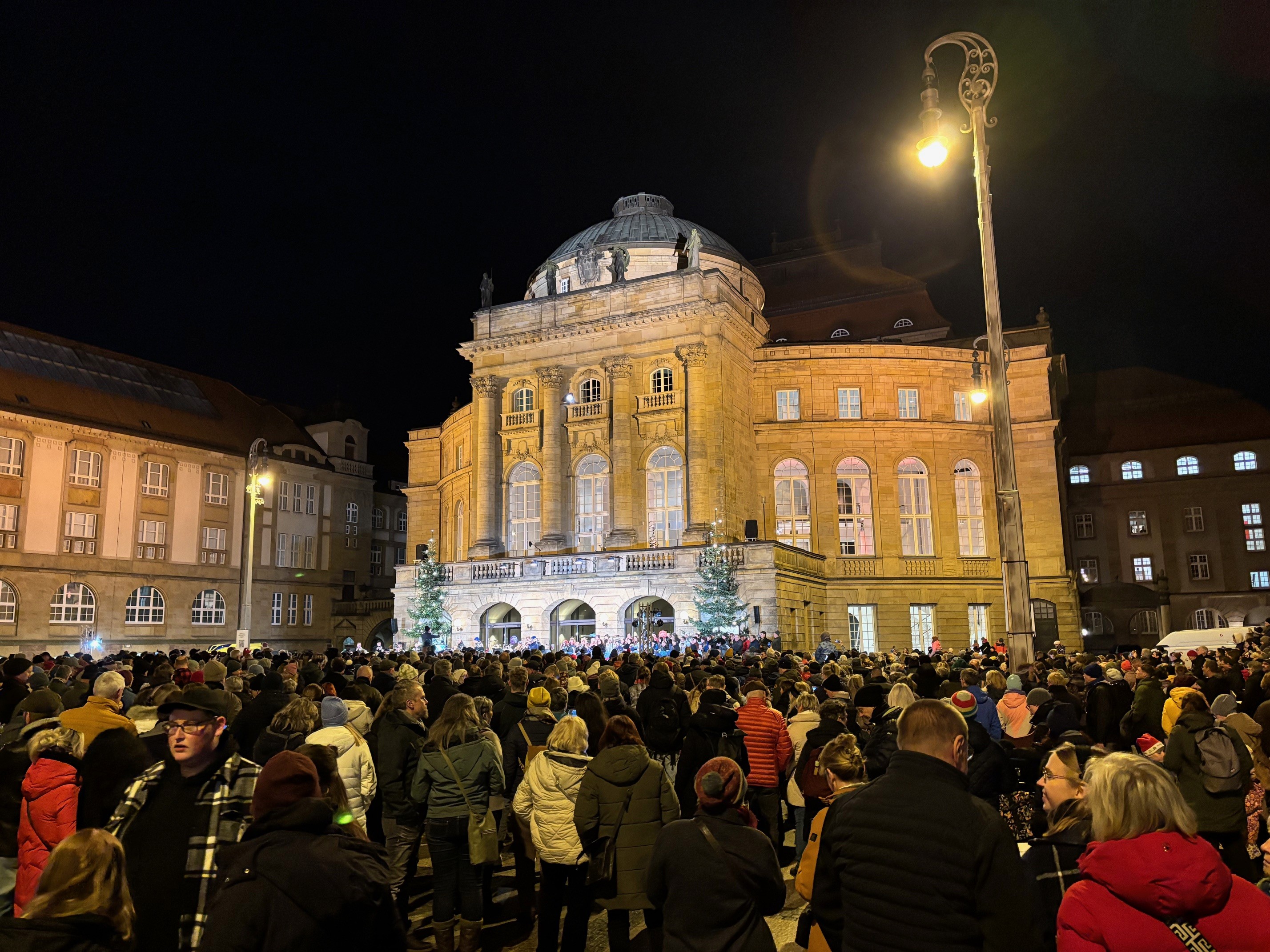
The European Mining Parade started punctually at 2 pm at the theatre square. I met up with my family and we watched the passing mining bands and miners together on the Street of Nations, after which we watched the big closing concert on the theatre square. There were over 6000 visitors on the square and many of them stayed, because the Christmas carol singing began at 5 pm, together with the choirs of the Chemnitz Theatre and the brass players of the Robert Schumann Philharmonic Orchestra. With mulled wine and Christmas carols, the Christmas spirit was already starting to set in.
Now it was time for my last volunteer assignment in the Capital of Culture year.
We were around 130 volunteers who were involved in the last act of the stage programme. We were given glow sticks about 50 cm long, which we hid under our jackets before we spread out in the audience in front of the stage. at 8pm, the stage programme began next to the Karl Marx head with music from a brass band standing high up on a balcony. Then the two KuHa directors came on stage and talked about the highlights of the KuHa year and thanked the people of Chemnitz and the staff. Our mayor brought all 38 mayors of the Capital of Culture region on stage and thanked them for their great support and solidarity. Now came our cue, because the dancers from "Ballroom Bliss" were on stage and the command "Hold your glow sticks in the sky of Chemnitz" rang out. Music played and we spun around our own axis and encouraged the people standing around us to dance with us. The result was a cool togetherness. People were dancing all over the street. It felt like everyone was dancing with everyone else and we volunteers lay in each other's arms and were happy that it was such a nice ending. But we were also sad that it was all over now.
My conclusion:
I had a wonderful and eventful year. Nobody can take this great time away from me. I got to know so many wonderful people that I wouldn't have met otherwise. THANK YOU BEAUTIFUL, dear European Capital of Culture 2025!