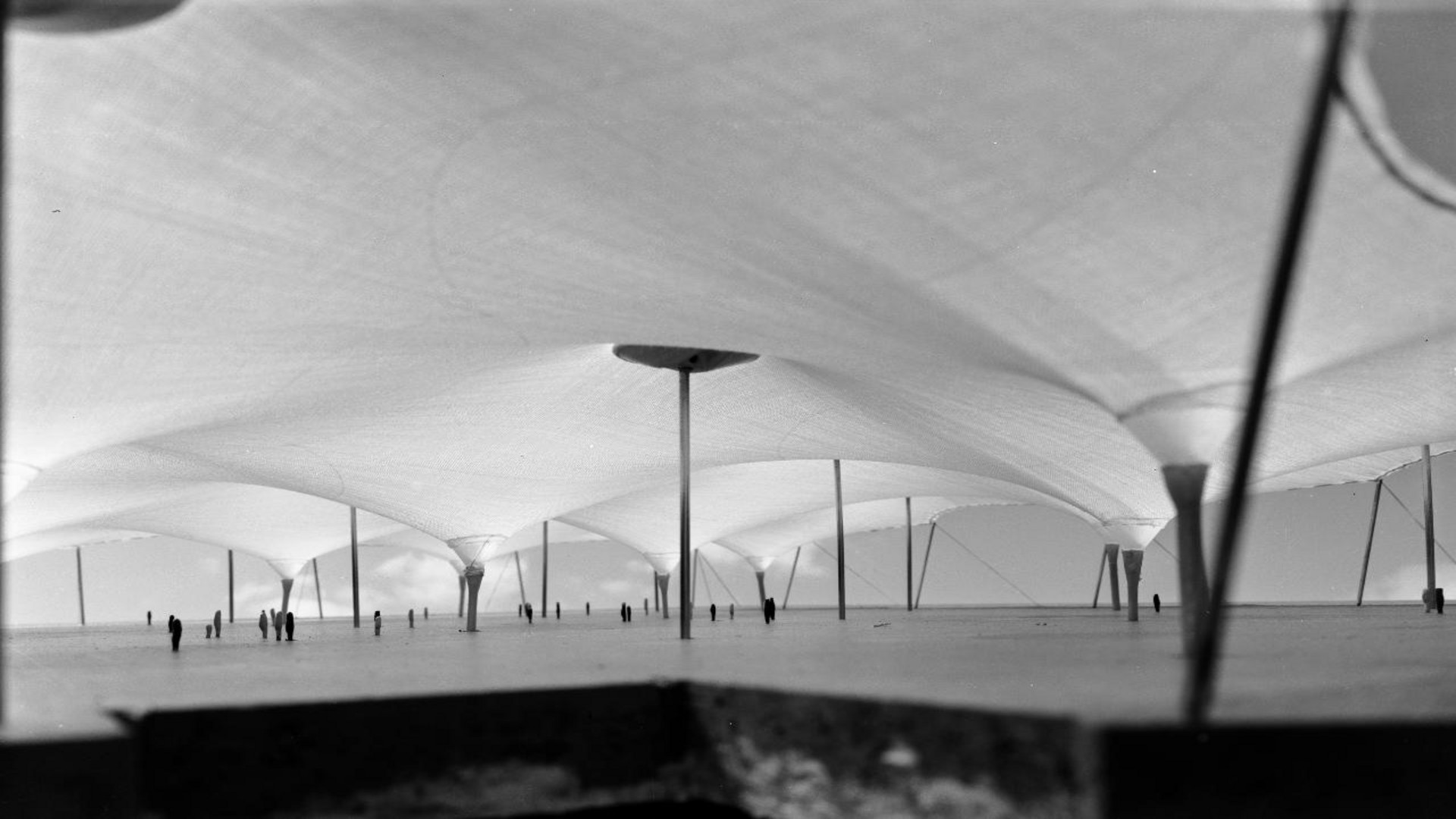
No other person knows Frei Otto's life and work as well as his daughter and long-time collaborator Christine Kanstinger. In her lecture, she presents Frei Otto's main ideas and principles and outlines individual periods of his life. She will then enter into dialogue with Kengo Kuma and other guests on the individual themes of the exhibition and Kuma's relationship with Frei Otto, ending with the question of sustainable architecture for the 22nd century.
Kengo Kuma
With his buildings, Japanese star architect Kengo Kuma is committed to the nature and tradition of Asia: "The essence of my work is the use of natural materials to create airy, open spaces filled with sunlight," says Kengo Kuma, describing his approach. In his architecture, Kengo Kuma succeeds in effectively combining archaic materials, traditional Japanese architecture and innovative technologies.
In addition to sustainable design and progressive thinking, Kengo Kuma and Frei Otto share the same task at different times: The planning of an Olympic stadium. Together with Günther Benesch, who grew up in Chemnitz, Frei Otto planned the stadium for the 1972 Olympic Games in Munich. Kengo Kuma, on the other hand, was allowed to design the Tokyo 2020 Olympic stadium in the spirit of "humanity, nature and intimacy", according to his own statement.
In January 2024, Kengo Kuma had already given a lecture entitled "Go back to nature" in the central lecture theatre at Chemnitz University of Technology in front of an audience of around 500 as part of the "100 years of Frei Otto" series.