Duration: 1 h 20 min
Information: Without spoken word
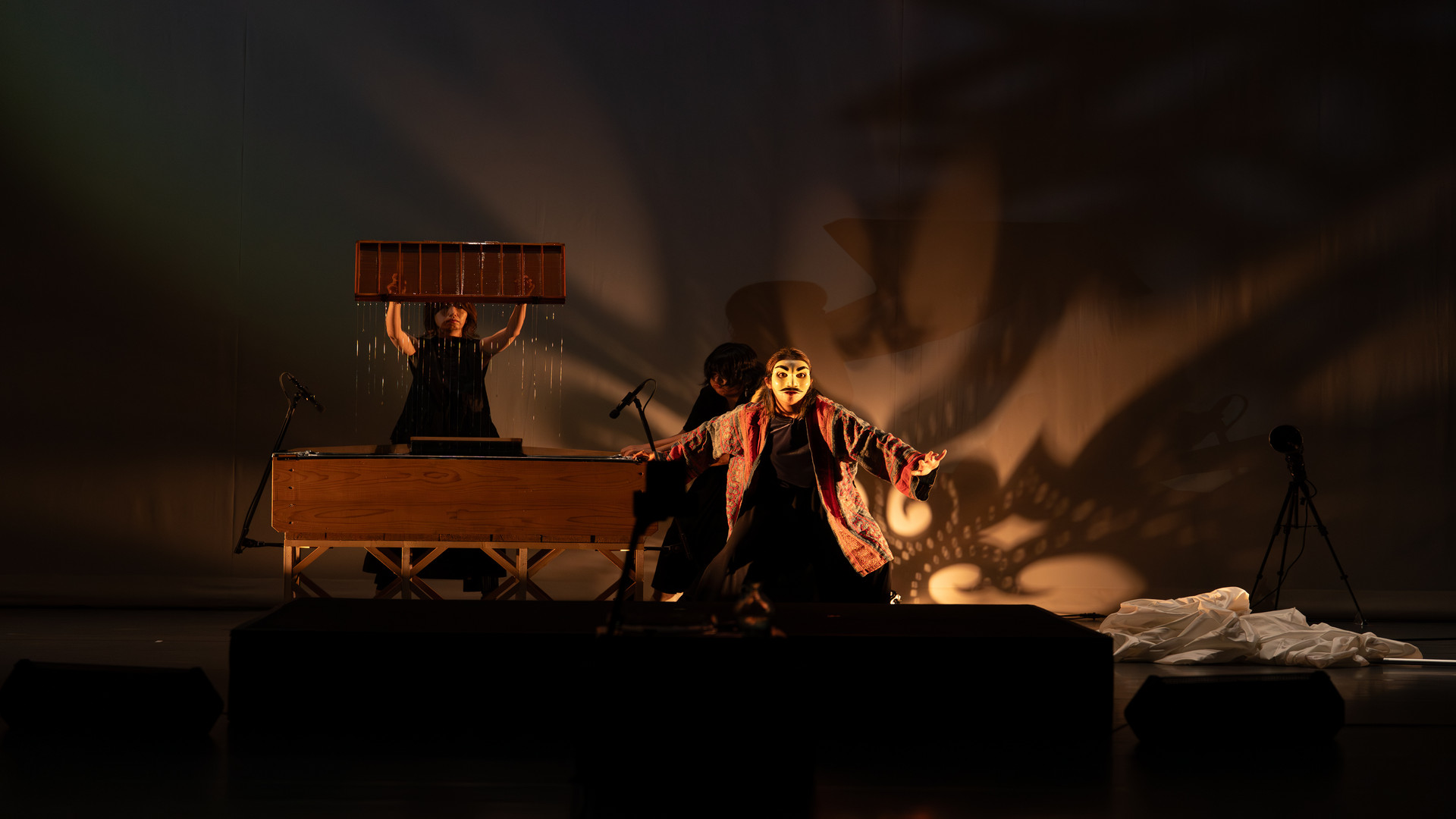
A river divides the landscape. A railway line cuts through mountains. Something insists on passing through, even in the face of resistance. In the Ainu language of the indigenous people of northern Japan, kuste means ‘to let something pass through a place’. This is precisely what this sensory theatre piece achieves. The stage is filled with a silent world of images. The atmosphere simply invites you to marvel and observe. The audience encounters the history, lives, and living presence of the Ainu, whose history is deeply intertwined with modern infrastructure projects that opened up the land while displacing Indigenous ways of life. The performance focusses on research about Kaneto Kawamura, the grandfather of the performers onstage, Mayunkiki and Rekpo. A leader of the Ainu community in Asahikawa and a surveying engineer for the Japanese National Railways. He oversaw the construction of one of the most difficult railway projects of his time: the Sanshin Railway, built through the steep gorges of the Tenryu River, a fast-flowing river that runs from Nagano through the Oku-Mikawa region of Aichi before reaching the Enshu Sea in Shizuoka. In kuste, this railway construction appears as an encroachment on land, culture, and memory – not as progress.