Duration: 1 hour 20 minutes
Information: In French with German and English surtitles.
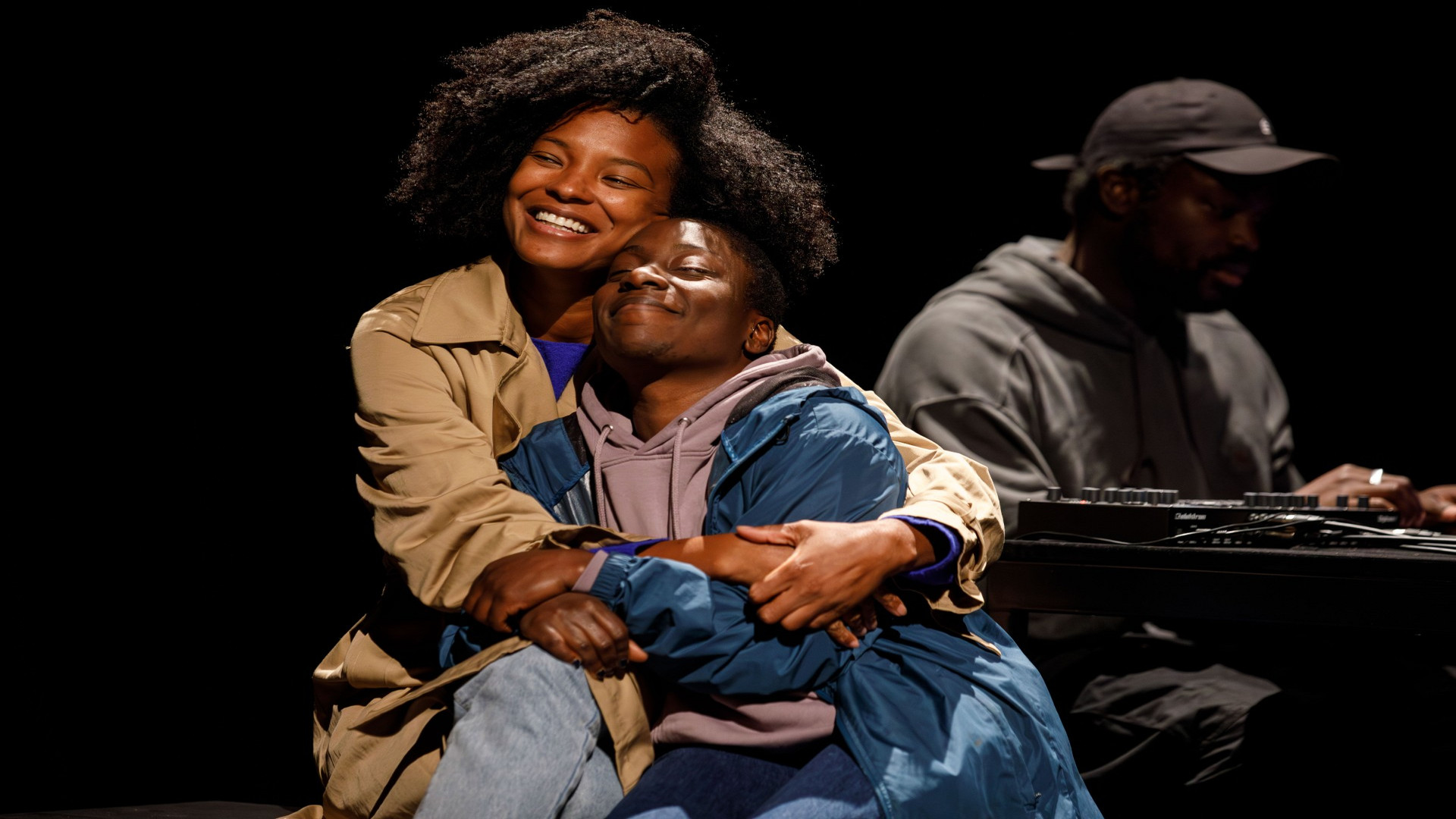
A woman throws a sweet wrapper on the floor. That’s enough: a police check, an arrest, a night in custody. The accusation is trivial, the consequences are not. Her body is restrained, ques tioned, reduced. Order is enforced. La Grande Ourse, in English ‘The Great Bear’, begins where state power becomes an everyday occurrence.
The author Penda Diouf has her roots in Senegal and Ivory Coast. Now living in France, she does not write met aphors for violence; she describes its mechanisms – surveillance, discipline, shaming, carried out on a woman. She is observed and evaluated. The dense text allows no distance; it remains close to the body, to the voice. Diouf’s writing begins where language often fails: with shame, anger, loss of control. In the play, the woman begins to hear what lies beneath the surface. Her body changes. Her anger takes shape. The woman becomes the Great Bear.
From 18 June to 5 July 2026, Chemnitz will be in the international spotlight: Germany's largest international theatre festival "Theatre of the World" is coming to Chemnitz - directly following the Capital of Culture year 2025. For three weeks, Chemnitz will be a meeting place for artists, audiences and theatre enthusiasts from all over the world. A lively celebration of the performing arts will take place on stages, in urban spaces and in unusual locations, overcoming borders and bringing together stories from all parts of the world.
Nine international curators from Australia, Canada, Colombia, Argentina, South Africa, Greece, Jordan, India, Senegal and China are responsible for the festival programme. They will meet in Chemnitz in November to select around 40 outstanding productions - works that they have previously viewed in their regions. The result is an inspiring panorama of current theatre forms, languages and perspectives.