Duration: 1 h 15 min
Information: In English with German surtitles
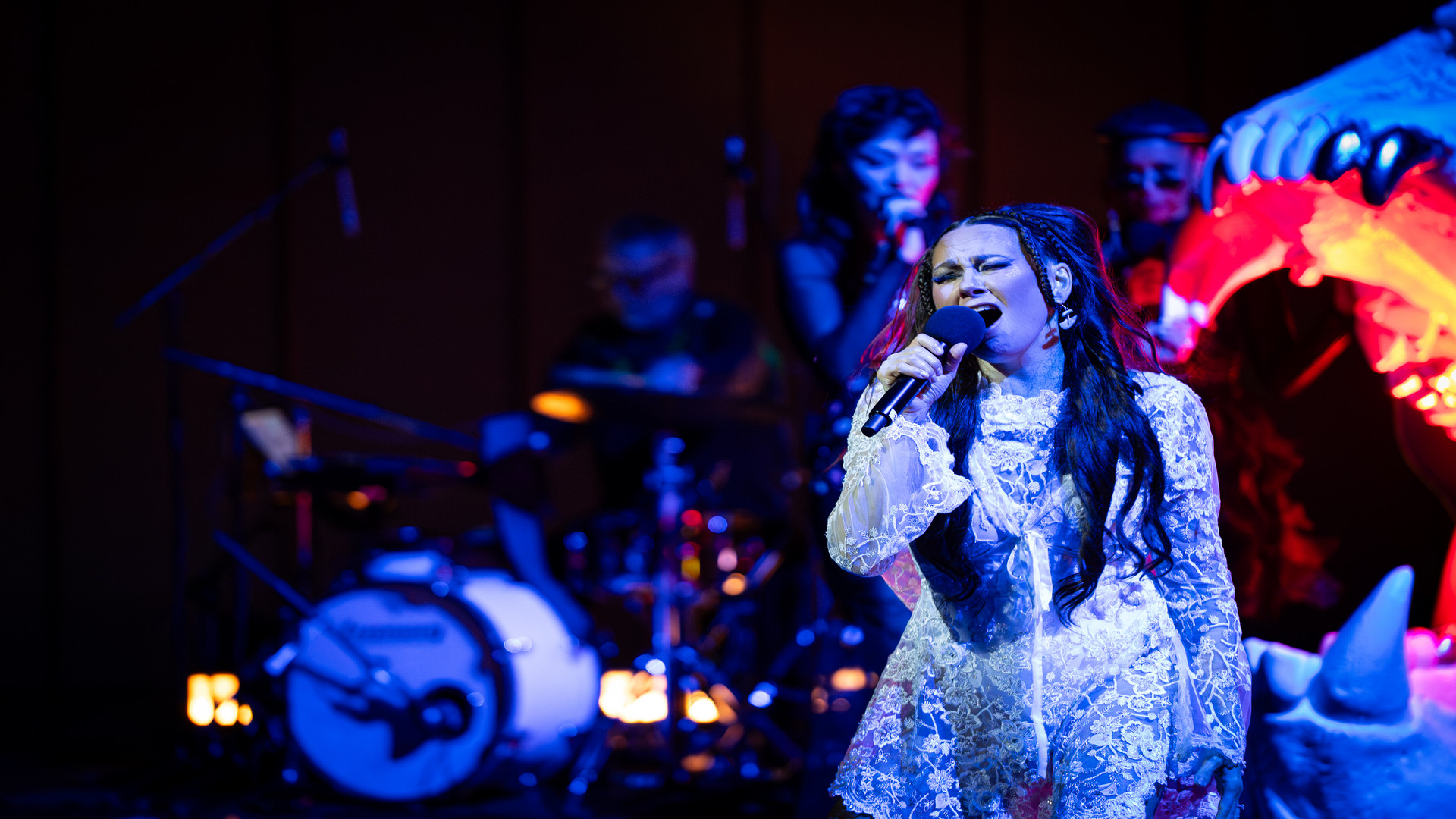
Tanya Tagaq comes from Nunavut in northern Canada. She is currently the most prominent female voice in indigenous art in North America – in the truest sense of the word: she is a singer, musician, composer, and author. Her art is difficult to categorise, as each of her works possesses its own unique character. As an artist and Inuk, she is committed to minority rights and equality. Her writing, her albums, and her performances convey joie de vivre and self-confidence to millions of people. Tanya Tagaq opens the THEATER DER WELT Festival in Chemnitz with a glimpse into the abyss that lies between destruction and salvation. She combines motifs from her autobiographical novel ‘Split Tooth’, with compositions from her current album ‘Saputjiji’ to cre ate a unique literary-musical form.
The audience is taken off to a small town bordering the Arctic Ocean, above the Arctic Circle. Tanya Tagaq tells the story of a young girl who is shaped by the overwhelming power of nature and her disintegrating indige nous community. With poetic force, Tagaq describes how the child dis covers her roots in Inuit myths. Under the northern lights, the boundaries between humans and nature as well as time and space blur, marking the begin ning of a journey of self-discovery that has the ability to heal old wounds.
From 18 June to 5 July 2026, Chemnitz will be in the international spotlight: Germany's largest international theatre festival "Theatre of the World" is coming to Chemnitz - directly following the Capital of Culture year 2025. For three weeks, Chemnitz will be a meeting place for artists, audiences and theatre enthusiasts from all over the world. A lively celebration of the performing arts will take place on stages, in urban spaces and in unusual locations, overcoming borders and bringing together stories from all over the world.
Nine international curators from Australia, Canada, Colombia, Argentina, South Africa, Greece, Jordan, India, Senegal and China are responsible for designing the festival programme. They will meet in Chemnitz in November to select around 40 outstanding productions - works that they have previously viewed in their regions. The result is an inspiring panorama of current theatre forms, languages and perspectives.