EXI(S)T
The Chemnitz 2025 residency programme


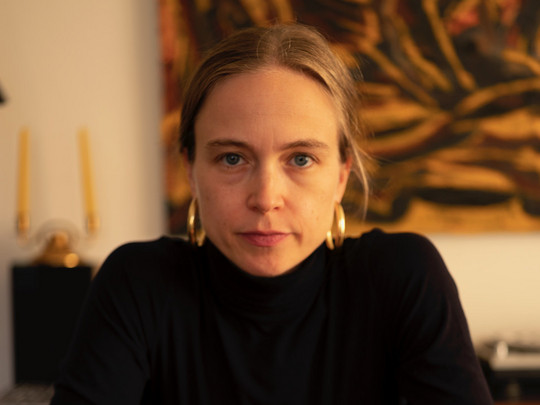
The US author Kathryn Scanlan spent two months working in the European Capital of Culture Chemnitz in autumn 2025. The residency was jointly organised by the Goethe-Institut New York, Chemnitz 2025 - European Capital of Culture and the international literature festival berlin.
Kathryn Scanlan is considered one of the most independent voices in contemporary US literature. Her texts are characterised by a documentary narrative style and a close proximity to the lives of the American working class - a perspective that also fits the history and present of the former Karl Marx city of Chemnitz. In her work "Kick the Latch" (2022), which was published in 2024 under the title "Boxenstart" in a German translation by Jan Karsten, she tells of the life of a horse trainer in literary vignettes. The book was awarded the Windham-Campbell Prize.
The residency was organised as a tribute to Stefan Heym, son of the city of Chemnitz and a formative voice in German post-war literature. Following oppression and persecution under National Socialism, he fled to the USA via Czechoslovakia to study there. He later returned to war-torn Germany and became one of the critical public intellectuals of the late GDR. The residency thus also sees itself as a literary exploration of the spirit of his native city and as a bridge between past and present.
Her residency began with an appearance at the 25th international literature festival berlin on 19 September 2025 at the Haus der Berliner Festspiele, where she spoke about literature, horses and milieus in upheaval together with the Leipzig writer Clemens Meyer. A reading and discussion with Kathryn Scanlan took place at the Hartmannfabrik on 24 October.
When? 5 September to 1 November 2025
Where? Chemnitz
↗Goethe-Institut New York , ↗internationales literaturfestival berlin, Chemnitz 2025