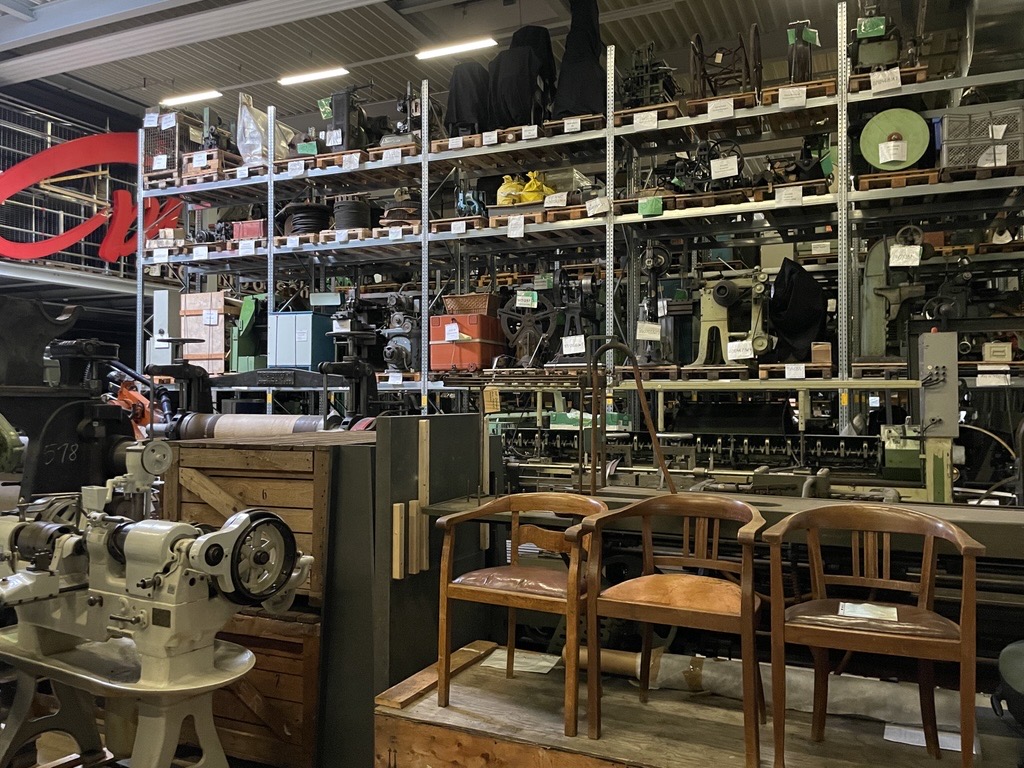
On 18 May, International Museum Day, the exhibition "John Cage: Museumcircle" at the Chemnitz Industrial Museum will end with a special event: an extraordinary concert will be performed in the museum's warehouse from 15:00 on Sunday until 05:00 on Monday morning.
Erik Satie's (1866-1925) "Vexations" will be performed, a piece that repeats an approximately one-minute motif 840 times. This meditative soundscape will be created by five international pianists, including artists from Japan, Portugal and Germany.
During the 14-hour concert, visitors can move freely through the depot of the industrial museum, coming, going or lingering at any time.
Particularly exciting: amidst the ‘secret treasures’ of the industrial museum - such as a facing lathe, historic street lamps, illuminated adverts or a paper press - an interplay of sound and technological history is created.
The piano composition Vexations became famous when it was premiered by John Cage (1902-1992) in September 1963. It is still regarded today as a predecessor of musical minimalism and ‘machine music’ and as one of the longest pieces in music history.
The Museumcircle exhibition, which reflects the art and cultural history of the region with over 100 objects, was conceived by John Cage. There will be a guided tour of the exhibition at 14:00 before the concert.
Admission to the concert is free. Admission is via the museum car park (not via the museum), gate opposite the "Industriemuseum" stop.
On 18 May, International Museum Day, admission to the entire Chemnitz Industrial Museum is also free (open 10 am - 5 pm).
↗concert dates on industriemuseum-chemnitz.de