Arts Theatre Reading Young People Teenagers German

Micro-project | Grand Slam of Saxony 2026

On 25 June 2026, the Alter Gasometer will be transformed into the loudest, most intelligent and most emotional venue on the Saxon poetry slam scene.
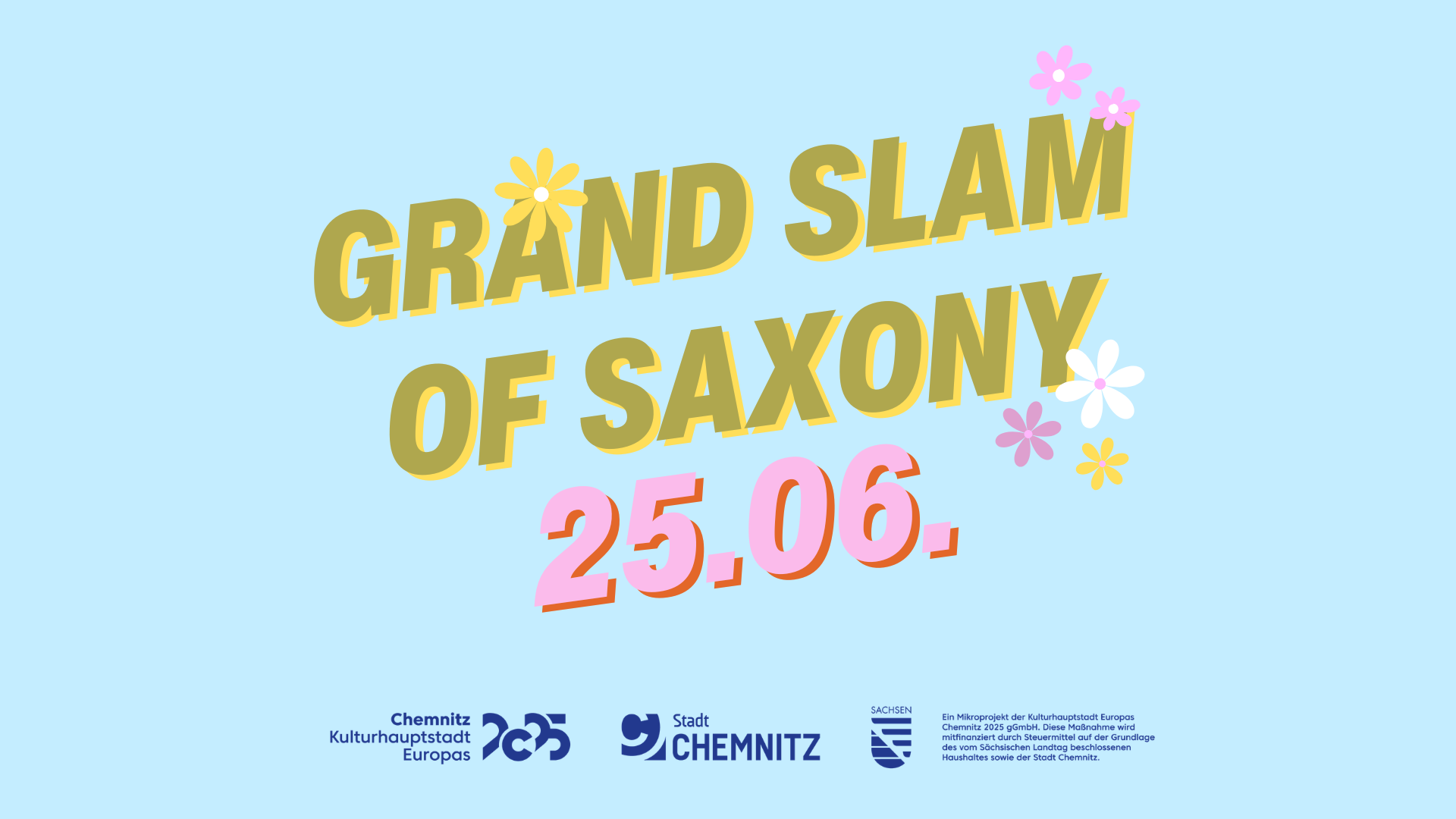
[Translate to Englisch:] Poster des Grand Slam of Saxony

Event information

Date & Time

until

Location

Zwickau, Old Gasometer

entrance 12 Euro

When words strike sparks and applause decides the winner, it’s time once again for the Grand Slam of Saxony!

On 25 June 2026, the Alter Gasometer will be transformed into the loudest, cleverest and most emotional venue on the Saxon poetry slam scene. At the Grand Slam of Saxony 2026 – the official Saxon Poetry Slam Championship – the best slammers from across the Free State will come together to battle it out for the title with their verses.

Whether it’s sharp-tongued social commentary, biting humour, spine-tingling poetry or linguistic escalation: this is where voices, perspectives and emotions collide. Only the crème de la crème of the scene have qualified for this final – and in the end, it is the audience alone who decide who will leave Saxony as champion in 2026.

Organiser: Alter Gasometer e.V.
In collaboration with Spektakel Kollektiv Chemnitz e.V.

more information

Accessibility

Assistance dog welcome

It is possible to bring an assistance dog.

Ticketing service

Tickets can be purchased without barriers.

Microprojects

The micro-projects are intended to provide impetus for new cultural formats or encounters in Chemnitz and the Capital of Culture Region. The broad urban and regional society is called upon to create forms of communication and social interaction. The funding programme has existed for several years and is part of the main programme of the European Capital of Culture Chemnitz 2025.


City of Chemnitz The Federal Government Commissioner for Culture and Media Free State of Saxony European Capital of Culture

This project is cofinanced by tax funds on the basis of the parliamentary budget of the state of Saxony and by federal funds from the Beauftragter der Bundesregierung für Kultur und Medien (Federal Government Commissioner for Culture and Media), as well as funds from the City of Chemnitz.