Chemnitz und Nova GoricaGorizia verabschieden sich aus dem Jahr als Kulturhauptstädte Europas 2025
Memorandum zur künftigen Kooperation der Städte unterzeichnet
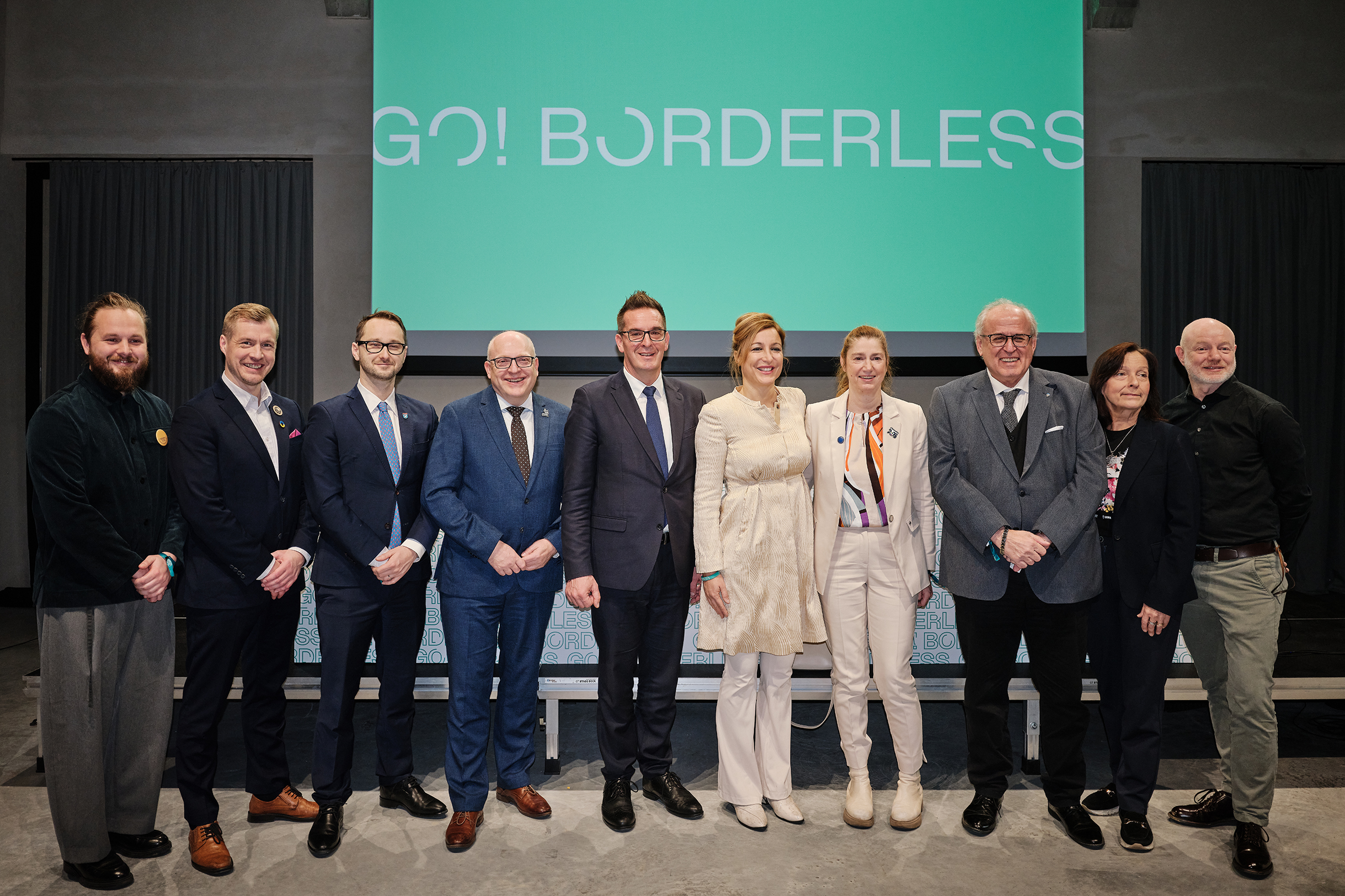
Oberbürgermeister Sven Schulze hat heute Abend an der offiziellen Staffelstabübergabe der Kulturhauptstadt Europas in Nova Gorica/Gorizia teilgenommen. Begleitet wurde er von den beiden Geschäftsführenden der Kulturhauptstadt Europas Chemnitz 2025 gGmbH, Andrea Pier und Stefan Schmidtke. Der Festakt fand am späten Nachmittag auf dem Trg Evrope/Piazza Transalpina statt, dem zentralen Platz direkt auf der Grenze zwischen Slowenien und Italien. Vertreter:innen der amtierenden und der kommenden Europäischen Kulturhauptstädte – Chemnitz 2025, Nova Gorica/Gorizia 2025, Oulu 2026 und Trenčín 2026 – waren vor Ort.
Bei der öffentlichen Zeremonie übergab Samo Turel (Nova Gorica) den Staffelstab der Europäischen Kulturhauptstadt an Richard Rybníček (Trenčín), Oberbürgermeister Sven Schulze übergab ihn an Lauri Nikula (Oulu). Als symbolischer Staffelstab fungiert die Skulptur „UNITY – The Flame“ der luxemburgischen Glaskünstlerin Pascale Seil („Made by Seil“). Die Flammenform steht für Kraft und Unendlichkeit, das Material Glas für Transparenz und Leichtigkeit, die Farben für Vielfalt und Zusammenhalt: Einheit für Europa. Die offizielle Übergabezeremonie findet zum vierten Mal in Folge statt und wurde von der Europakonferenz Esch 2022 initiiert. An der Veranstaltung nahmen Delegationen aus Slowenien, Italien, Deutschland, Finnland und der Slowakei teil.
Der Programmteil umfasste einen Lichter- und Musikumzug, der von beiden Seiten der Grenze startete und sich auf dem zentralen Veranstaltungsplatz am Grenzpunkt, dem Trg Evrope/Piazza Transalpina, traf. Begleitet wurde der Umzug von einer großen Gruppe Kinder, die die Kulturhauptstadt mit Gesang verabschiedeten. Den Abschluss bildete ein Auftritt des deutschen Produzenten und DJs Fritz Kalkbrenner, der bereits das Kulturhauptstadtjahr 2025 in Chemnitz eröffnet hatte.
Bereits am Mittag unterzeichneten die Bürgermeister Samo Turel (Nova Gorica), Rodolfo Ziberna (Gorizia) und Oberbürgermeister Sven Schulze ein Memorandum, in dem sie die weitere Zusammenarbeit über das Kulturhauptstadtjahr hinaus vereinbarten.
Zitate
Oberbürgermeister Sven Schulze: „Die Unterzeichnung unseres Memorandums zeigt, wie eng und vertrauensvoll die Partnerschaft zwischen Chemnitz und Nova Gorica/Gorizia geworden ist. Aus Zusammenarbeit ist echte Freundschaft geworden. Dieses Miteinander über Landesgrenzen hinweg steht beispielhaft für das, was Europa im Kern ausmacht: gemeinsam Lösungen finden, voneinander lernen und Haltung zeigen. Heute geben wir den Staffelstab an Trenčín und Oulu weiter und wünschen ihnen, dass ihr Europäisches Kulturhauptstadtjahr genauso viel Selbstbewusstsein freisetzt und neue Wege öffnet, wie es bei uns der Fall war.“
Andrea Pier, kaufmännische Geschäftsführerin der Chemnitz 2025: „Mit der Übergabe des Staffelstabs an Oulu und Trenčín spüren wir einmal mehr, was die ECoC Family, die Gemeinschaft der Europäischen Kulturhauptstädte, wirklich bedeutet. Die ECoC Family hat uns über die letzten Jahre getragen, inspiriert und gezeigt, dass keine Kulturhauptstadt Europas diesen Weg allein geht. Jetzt wünsche ich Oulu und Trenčín ein unvergessliches Jahr 2026.“
Stefan Schmidtke, Geschäftsführer Programm Chemnitz 2025: „Besonders gefreut hat uns in diesem Jahr die enge und inspirierende Zusammenarbeit mit unseren internationalen Partnern. Ein besonderer Dank gilt dabei unserer Partner-Kulturhauptstadt Nova Gorica 2025. Wir haben neue Perspektiven entdeckt und gleichzeitig gemerkt, wie viel wir doch gemein haben: zwei osteuropäische Städte, geprägt von ihren Umbrüchen. Ich freue mich, dass wir dieses Jahr gemeinsam europäische Kulturhauptstadt sein konnten, und freue mich auf neue Perspektiven und Impulse aus Trenčín und Oulu im kommenden Jahr.“
Samo Turel, Bürgermeister von Nova Gorica: „Allen, denen wir den Titel heute übergeben, wünsche ich ein erfolgreiches Jahr. Möge das ECoC-Projekt ihnen Zufriedenheit, erfolgreich umgesetzte Pläne und erfüllte Ziele bringen. Ich wünsche ihnen zudem viel Geduld – aus eigener Erfahrung weiß ich, dass eine sehr intensive Zeit auf sie wartet. Vor allem wünsche ich ihnen den gleichen Erfolg, den wir genießen durften: dass sie die in ihrem Bewerbungsbuch gesetzten Ziele erreichen und auch künftig erfolgreich mit uns zusammenarbeiten.“
Rodolfo Ziberna, Bürgermeister von Gorizia: „Wir werden die Gelegenheit haben, die Ergebnisse dieser außergewöhnlichen Europäischen Kulturhauptstadt im Detail zu analysieren, die, wie internationale Beobachter wiederholt hervorgehoben haben, die beste unter den bisher vergebenen war. Wir haben GO! 2025 dank der außergewöhnlichen Zusammenarbeit der Region und weiterer Akteure, aber auch gemeinsam mit zahlreichen Vereinen und Bürgerinnen und Bürgern umgesetzt. Den „Geist des 8. Februar“, der die Stadt durchdrang, werde ich nie vergessen: Gorizia kann viel geben, und ich bin stolz, Bürgermeister dieser Stadt zu sein.“
Patrik Žák, stellvertretender Bürgermeister von Trenčín: „Die Verleihung des Titels Europäische Kulturhauptstadt war ein historischer Moment für Trenčín. Es ist nicht nur eine prestigeträchtige Auszeichnung, sondern vor allem eine große Chance zur Veränderung – für unsere Stadt, unsere Region und unsere Menschen. Kultur hat die Kraft, Energie, Sichtbarkeit und langfristigen Mehrwert zu bringen. Wir sind entschlossen, diese Chance bestmöglich zu nutzen.“
Ari Alatossava, Bürgermeister der Stadt Oulu: „Oulu setzt auf den ‚kulturellen Klimawandel‘ – eine Bewegung, die Kunst, Kreativität und Beteiligung nutzt, um eine offenere, nachhaltigere und inklusivere Gesellschaft zu fördern. In der Stadt und der Region veranstalten wir fast 3.000 Events. Dies ist das Ergebnis jahrelanger Vorbereitung, neuer Veranstaltungsorte und Partnerschaften mit 39 Gemeinden. Besucherinnen und Besucher erleben Festivals auf Weltniveau, lokale Spezialitäten und den einzigartigen Geist der nördlichen Kultur – ganz aus dem Norden, für die Welt.“